
How to Search Criminal Dockets
Kansas CaseSearch is the main web channel for public district-court case events. Start with the complete case number when possible. A party name can work, but a common name may return records from across Kansas unless the location is narrowed to Wyandotte. The portal separates party, business, nickname, attorney, citation, and case-number searches. It also offers filters for case type, status, filing dates, and judicial officer. Registration and a reCAPTCHA step may be required.
First decide which court owns the matter. Felonies and state-law criminal cases are in the 29th Judicial District. City ordinance cases stay with the issuing municipal court unless appealed. Kansas Highway Patrol tickets begin in district traffic, while Kansas City, Kansas police citations generally route to municipal court. This distinction prevents an empty result from being mistaken for a missing case.
- Open Kansas CaseSearch and choose Wyandotte as the location.
- Enter the full case number or select the correct party-name search.
- Match the case type, filing date, party role, and court location.
- Open the events index and read entries in date order.
- Use the clerk or courthouse terminal for a missing public document.
Wyandotte Criminal Number Formats
Case numbers help separate similar results. Older official examples include 2019CR25 and RL2019CR25. Cases created after Wyandotte joined Odyssey in April 2023 may use a county-prefixed form such as WY-2023-CR-000001. That last string illustrates the state’s format only. It is not an actual case.
Search the exact number first, including the county and case-type code. If that fails, try the legacy form or a party search. A format change does not mean the old docket vanished. Pre-conversion material may require the courthouse kiosk or the criminal counter because not every older record or document was converted for web access.
What a Criminal Docket Shows
The header identifies the case, location, division, judge, filing date, type, and status. Party roles follow. The charge block should be read count by count because each count can carry its own statute, offense text, classification, plea, and result. Event lines then show filings, service, warrants, appearances, bond activity, hearings, orders, trial activity, disposition, sentencing, and later review. An event title is a pointer, not always the full document.
| Case Number | Legacy or Odyssey identifier, such as the format WY-2023-CR-000001. |
|---|---|
| Charges | Count, statute, offense description, severity, and amended charge when public. |
| Settings | Arraignment, pretrial, motion, plea, trial, and sentencing dates. |
| Plea | The plea entered on a specific count, which may change later. |
| Disposition | Dismissal, acquittal, conviction, diversion, or another final result. |
Wyandotte Criminal Counter Access
The district court criminal department is on the second floor at 710 N. 7th Street, Kansas City, Kansas. Its direct phone is 913-573-2905, fax is 913-573-4134, and email is wy.criminal@kscourts.org. The published counter hours are 8 a.m. to noon and 1 to 5 p.m., Monday through Friday. The clerk can confirm whether a case exists, explain how to inspect a public file, and quote available copy service.
A phone call is useful for a date or location check. An in-person visit or mailed request is better when the exact document matters. The public terminal on the courthouse mezzanine can expose public case information or converted documents that the web portal does not show. A Kansas Open Records Act request is another route for an identifiable judicial record, subject to court rules, exemptions, cost estimates, and the record custodian’s response.
The official criminal counter page shows where these records are handled.
View the source for the criminal department image.
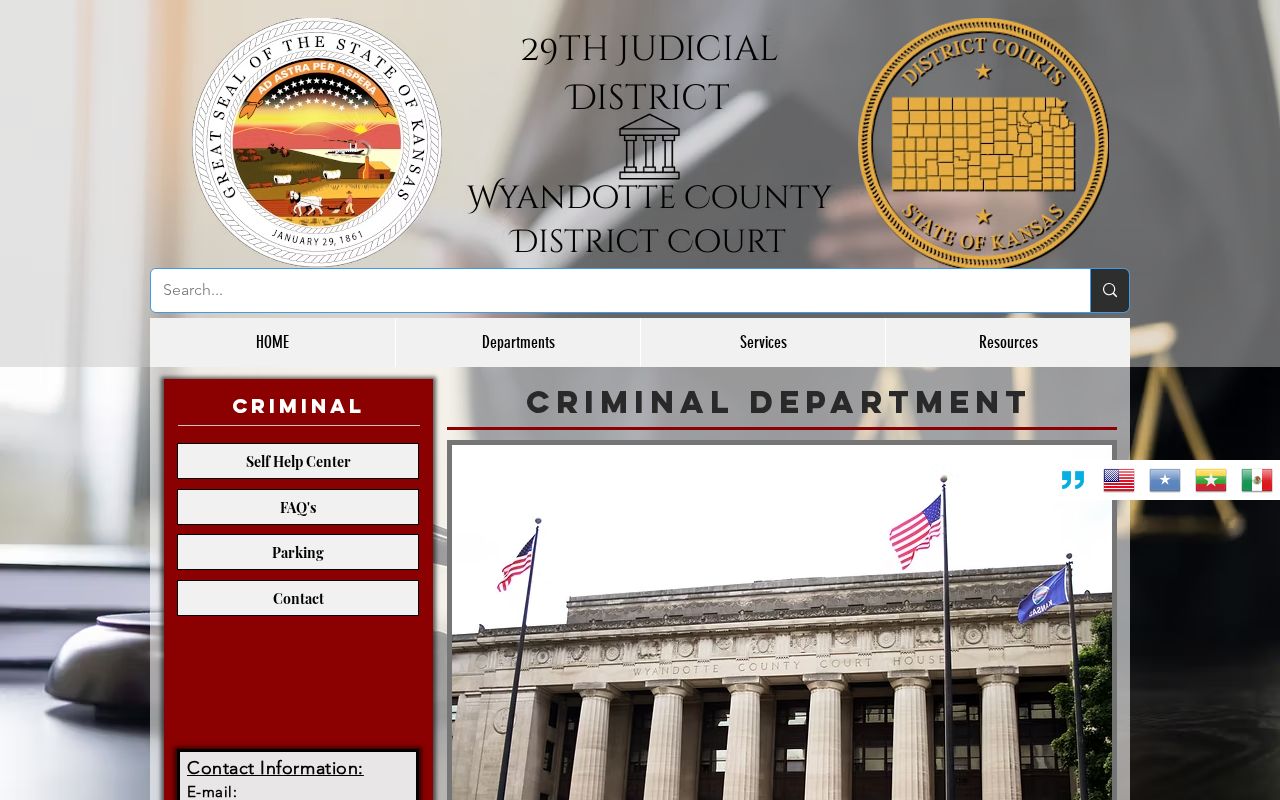
The captured page reinforces that district criminal records have a distinct local counter and contact path.
Stages on a Criminal Docket
A complaint, information, or indictment begins the visible sequence, but it states an accusation rather than an outcome. Initial appearances and arraignment follow. The docket may then record counsel, service, warrants, bond, discovery notices, motions, continuances, and pretrial conferences. A plea entry must be tied to the right count and date. Trial entries can show whether the matter was heard by a jury or the court. Finally, disposition and sentencing entries state what occurred. Appeals, probation events, or expungement orders can add later lines.
Docket flow: Charge Filed › Arraignment › Pretrial Settings › Plea or Trial › Disposition
Do not treat bond as the result. A bond line concerns release conditions, security, or forfeiture. It can change while the charge remains pending. Likewise, a reset means the setting moved. It does not show that the prosecution ended.
Wyandotte Criminal Filing Outcomes
State statistics provide context without deciding any one case. In fiscal year 2025, the 29th Judicial District reported 1,646 felony dispositions. The official categories separate deferred outcomes, dismissals, pleas, other outcomes, jury trials, and court trials. Those categories show why a searcher should not stop at the filing label or a broad status field.
A criminal filing is an allegation entered into the court system. A disposition reports what happened to a charge. Different counts can end in different ways, and a plea on one count may accompany dismissal of another. Read the latest count-level event, the disposition date, and the sentence or order. Fiscal totals measure court work, not unique people, and they cannot fill gaps in an individual docket.
The fiscal year 2024 filing report and fiscal year 2025 disposition report answer different questions. They should not be compared as if every case began and ended in one year. Pending matters, amended counts, and older cases affect the totals. For a specific Wyandotte County criminal docket, dated events and count-level results remain the reliable sources.
Disposition terms also require care. A dismissal is not an acquittal, a deferred result is not the same as a final conviction, and a court trial differs from a jury trial. The event text and signed order supply that context. A broad portal status cannot replace them.
FY2025 categories also include pleas, jury trials, and court trials. They describe the route to disposition, not the full sentence or later supervision history. Open the case events and the public order before stating how any count ended.
Which Court Holds Criminal Dockets
The Kansas District Court for the 29th Judicial District has general criminal jurisdiction in Wyandotte County. Its unified Clerk of the District Court maintains felony and other assigned state-law criminal records. Judicial divisions are assignments within one district court, not separate county courts. The official judge roster helps confirm a division and courtroom when a setting lists only a judicial officer.
Municipal courts maintain separate dockets for city ordinance violations and traffic matters within their jurisdiction. Kansas City, Bonner Springs, Edwardsville, and Lake Quivira each have a municipal clerk. A municipal conviction appealed under K.S.A. 22-3609 becomes a new district-court matter with its own record. Federal charges are different again and belong to the U.S. District Court for the District of Kansas.
The roster image documents the local district divisions that can appear in a criminal case header.
View the source for the judicial roster image.
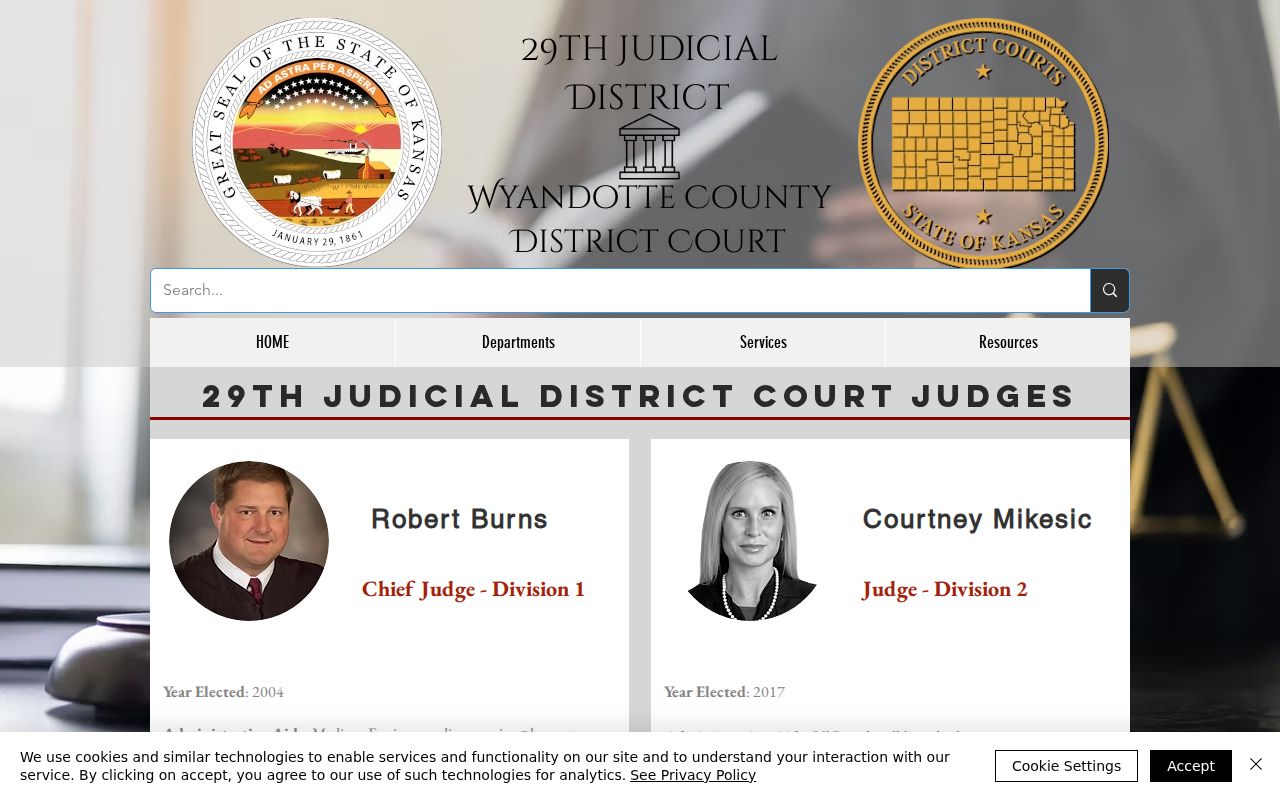
Checking the current roster prevents an old division reference from being treated as a current courtroom assignment.
When Criminal Images Say Kiosk
A public event can appear online while its filed image does not. The entry may say the document is available at a kiosk, may lack a download link, or may fall outside electronic access. Go to the mezzanine terminal and search the same case number. If the needed image is still absent, give the criminal clerk the case number, document title, and filing date. State whether a plain or certified copy is required.
A transcript is not the same item. The clerk maintains the case file and events index, while the managing court reporter handles transcript requests and quotes. For an older paper file or another identifiable record, use the clerk’s mail channel or the Kansas Judicial Branch request form. Restricted material remains restricted through every channel.
Public Access and Sealed Criminal Dockets
Kansas Supreme Court Rule 22 governs public electronic and courthouse-terminal access to court records. Public case events may be viewed, but search-warrant, grand-jury, coroner-inquest, juvenile, care-and-treatment, and other protected categories can be absent from the public portal. A sealed record is not made public merely because the searcher knows its number. Redacted information stays protected in an otherwise public file.
Expungement is also more than a status change. K.S.A. 22-2410 requires separation of qualifying expunged criminal files and limits disclosure. If a name search no longer returns a case, do not infer that no record ever existed or that the portal failed. The clerk can explain the public access route but cannot release material barred by law or court order.
Key Rules:
Kansas Supreme Court Rule 22 defines web and courthouse-terminal access and identifies nonpublic records.
K.S.A. 22-2410 limits disclosure of expunged criminal records.
K.S.A. 45-221 lists Kansas Open Records Act exemptions.
The criminal-expungement statute image points to the exact restriction that applies after a qualifying order.
View the source for the expungement image.
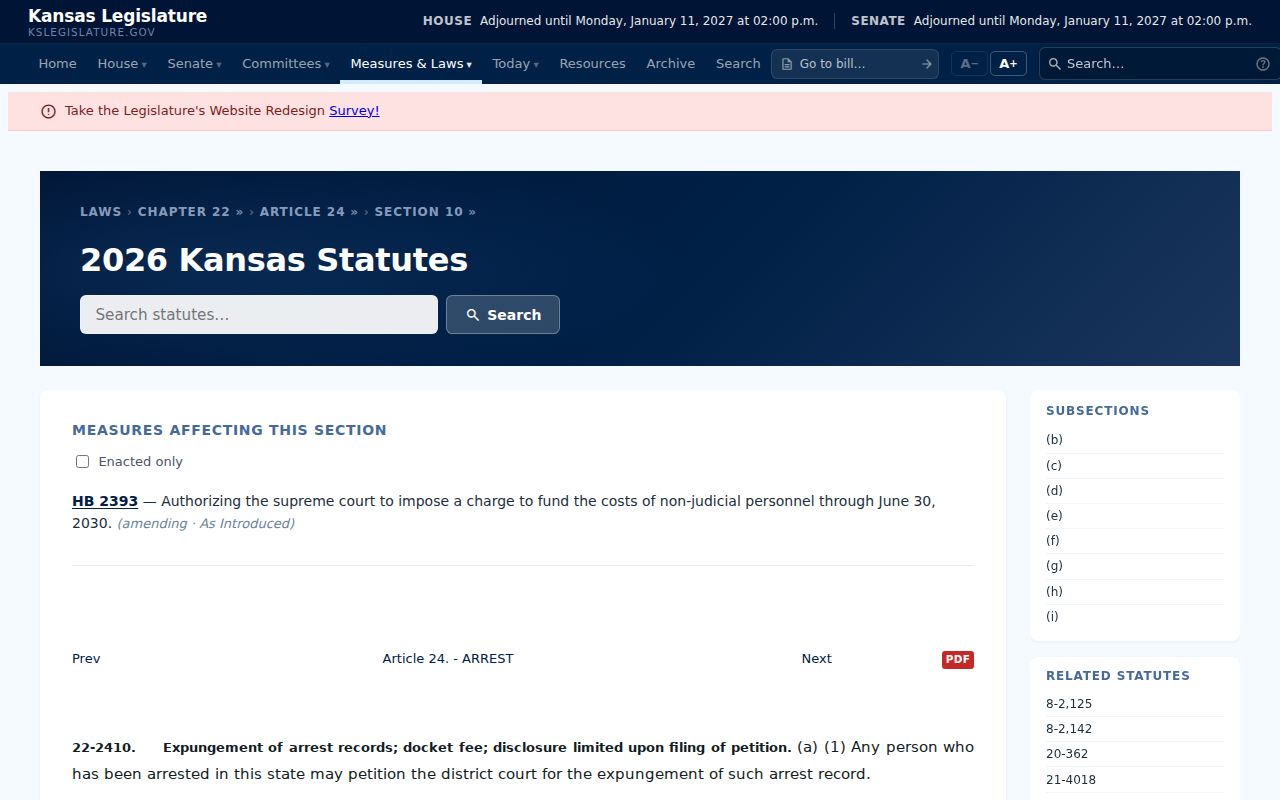
The statute confirms why an expunged file follows a different disclosure path from an ordinary public docket.